5 Repetitive Business Tasks You Need To Stop Doing Manually
Running a business comes with a long list of responsibilities and to-dos. You need to attract new customers, respond to enquiries, confirm orders, arrange deliveries, and monitor your sales.
When you sell on Instagram or WhatsApp, these tasks can quickly take over your day. You might spend the morning answering questions about prices and the evening reconciling orders and deliveries.
As your business grows, doing everything manually becomes harder. The good news is many of these tasks don't need your attention every single time.
The goal isn't to stop paying attention to your business. It's to stop spending valuable time on repetitive tasks you can simplify or automate.
Here are five repetitive business tasks you should stop doing manually, and what you can do instead.
1. Answering the Same Customer Questions Every Day
"How much is this?"
"Do you have this in black?"
"How do I place an order?"
"How much is delivery?"
If you sell through social media, these questions probably look familiar. Answering customer enquiries is part of running a business, but typing out the same responses dozens of times a day is not the best use of your time.
Even worse, customers may have to wait for a reply before they can decide whether to buy from you. If you're busy attending to another customer, packing orders, or taking a break, you could miss a sale simply because you weren't available to respond.
What to do instead
Create a system that gives customers access to the information they need without requiring you to answer every question individually.
An online store can display your product photos, prices, available sizes and colours, and ordering instructions in one place. Customers can browse your products and place orders when they're ready, without waiting for you to send product details in a DM.
You can still answer specific questions and offer a personal shopping experience. The difference is that you're no longer repeating basic information all day.
How Catlog helps: With Catlog, you can create an online storefront for your business and share your products with customers. Instead of sending individual product photos and prices in every conversation, direct customers to your store to browse and order.
2. Recording Orders and Customer Details In Notepads
A customer sends a DM. You confirm the items, ask for their delivery address, check their phone number, and write down the order. This process happens with the next customer, and another.
Before long, you're scrolling through conversations, searching for addresses, checking which items each customer requested, and trying to remember whether an order has been processed.
This approach might seem manageable when orders are few, but it becomes increasingly difficult as sales grow. One missed message or incorrectly recorded detail can lead to a delayed delivery, a wrong item, or an unhappy customer.
What to do instead
Use an order management system that keeps orders and customer information organised in one place.
Rather than relying on scattered chats, screenshots, and handwritten notes, you should be able to check what each customer ordered, view their details, and monitor the status of their order without searching through multiple conversations.
A more organised ordering process also makes it easier to handle busy periods, when several customers may be placing orders at once.
How Catlog helps: Catlog gives you a central place to manage your orders and customer information. With your orders organised, you can spend less time searching for details and more time making sure customers receive what they paid for.

3. Confirming Payments and Tracking Sales Manually
A customer sends a transfer receipt. You open your banking app to confirm the payment, return to WhatsApp to update the customer, and then manually add the sale to your records.
Multiply that process by several orders a day, and payment tracking becomes another job on its own.
When you don't have a consistent way to record sales, it's also easy to lose sight of how much your business has made. You may know that orders are coming in, but do you know your total sales for the week? Can you tell how much money came in today without going through old messages and transaction alerts?
What to do instead
Create a consistent process for confirming payments and recording sales.
Keep a clear record of each sale, the amount received, and any outstanding payment. Where your sales tools support it, use integrations or automatic recording to reduce the amount of information you have to enter yourself.
You should also review your sales regularly. Knowing how much you've sold helps you make better decisions about restocking, expenses, and what to prioritise next.
Remember: sales and profit are not the same thing. Money coming into your business doesn't automatically mean that amount is yours to keep.
How Catlog helps: Catlog's Money Tracker helps you track sales, expenses, debts, and profit in one place, with some sales recorded automatically. Instead of relying entirely on memory or scattered records, you can build a clearer picture of your business finances.
4. Coordinating Every Delivery Through Separate Chats
Once an order is ready, there's still the question of getting it to the customer.
You contact a delivery rider, share the customer's address, confirm the delivery fee, send the customer an update, and follow up to find out whether the package has arrived.
If you're handling several deliveries, these conversations can quickly become difficult to manage. You may lose track of which orders are awaiting dispatch, which riders have collected their packages, and which customers are still waiting.
Delivery coordination is necessary, but having to piece together every delivery from separate conversations makes it more complicated than it needs to be.
What to do instead
Establish a clear delivery process. Keep order details accessible, record delivery status, and use delivery tools that let you arrange dispatch without starting every process from scratch.
How Catlog helps: Catlog has partnered with 20+ delivery partners to make delivery seamless for you. You and your customers get a tracking link and are up to date with the status of the delivery, making it easier to keep your fulfilment process organised instead of relying entirely on chats and manual follow-ups.
5. Calculating Your Business Profit From Memory
You had a good sales week — orders came in, customers paid, and you restocked some of your best-selling products— but you're not entirely sure what your exact profit is.
You know how much you sold, but what about the total cost of the products, delivery expenses, packaging, advertising, and other business costs? What about money customers still owe you or expenses you haven't accounted for?
Trying to calculate your profit from memory at the end of the month can leave you with an incomplete picture of your finances, and when you don't know your numbers, it's harder to tell whether your business is making a profit.
What to do instead
Make tracking your business finances a regular habit rather than something you do only when you need the numbers.
Record your sales and expenses consistently. Keep track of money customers owe you, and review your income against your business costs. This helps you understand where your money is going and whether your business is making a profit.
You don't need to wait until the end of the month to start paying attention to your finances. A simple daily routine can make it much easier to stay informed.
Read more: How to track your business expenses.
How Catlog helps: Catlog's Money Tracker brings your sales, expenses, debts, and profit into one place, helping you understand your business finances without relying on memory or manually calculating them.
Run Your Business Smarter, Not Harder
As your business grows, the way you manage it needs to grow too.
Start by identifying the tasks that take up the most time. Then, look for tools like Catlog that can make them easier to manage.
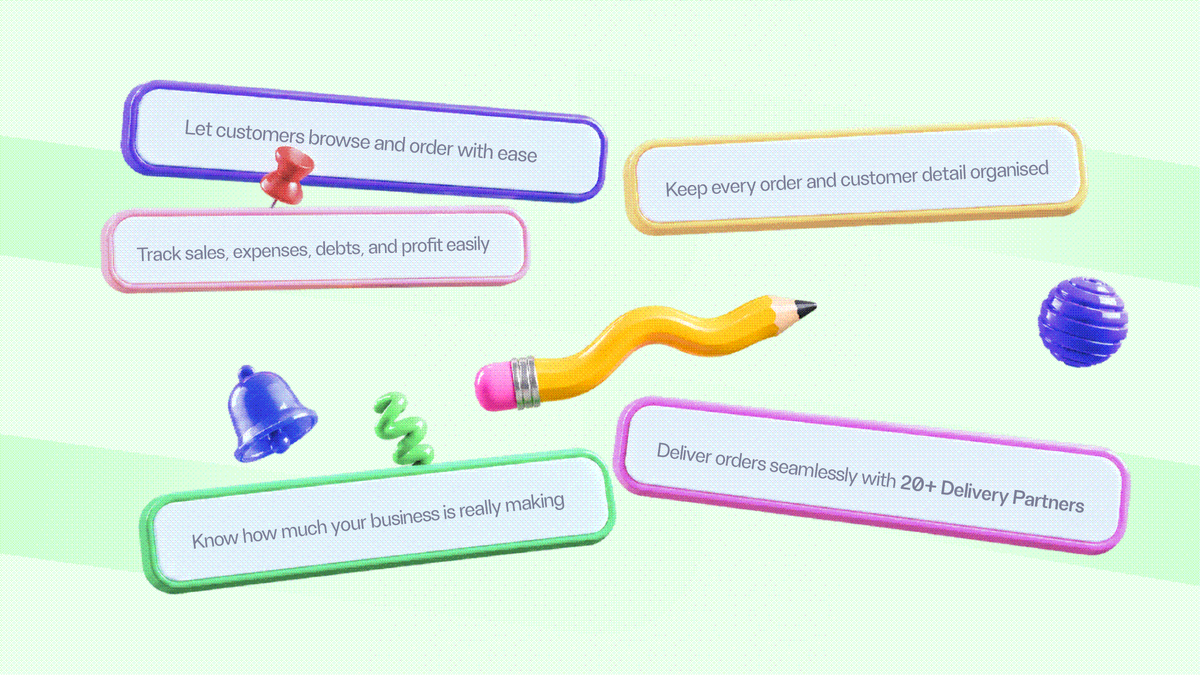
Catlog helps you bring more of your business operations together, from your online storefront and order management to delivery coordination and Money Tracker, so you can spend less time managing the same processes and more time growing the business you've worked hard to build.
Your business is growing; your way of running it should grow with it.